
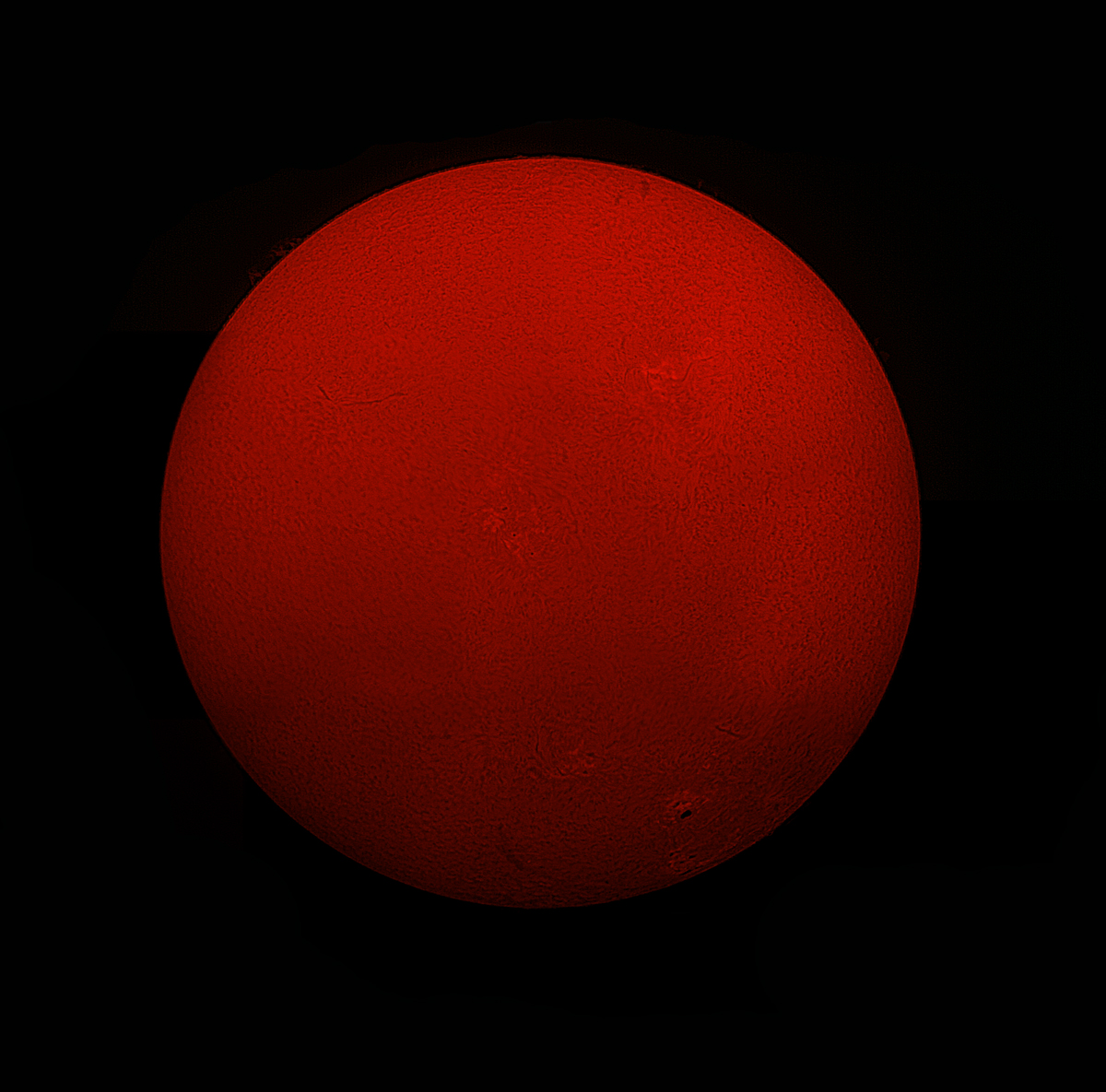
 For our July imaging meeting, there was considerable interest in the new Quark h-alpha solar filter by Daystar and it’s possibilities, not just for solar imaging, but for visual observing as well.
The discussion began with Phyllis Lang showing her new Quark Daystar h-alpha filter and explaining it’s specifications and performance. Input was given by others in attendance with how it would be comparable to other brands of expensive h-alpha solar scopes on the market today.
Next, images by our members were displayed to show the Quark’s potential for solar imaging. Images also were used to give a reference of what the Quark is capable of showing visually.
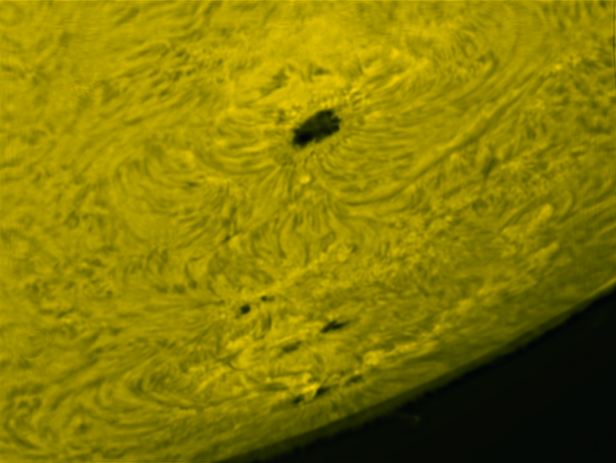
Using the Daystar Quark chromoshphere model, views and images of sunspot detail were great.
This image was acquired by Mike Mantini using Phyllis Lang’s Quark on his Orion ED80T scope, Atlas mount and Chris Cole’s IS DBK21 camera.
As can be seen, the Quark can give us an idea of the potential for a timelapse of evolving sunspots and could yield a great looking, meticulous mosaic of the entire solar disc.
Since this was our first time out imaging the sun using the Quark, our greatest challenge was dodging clouds, improvising ways to effectively image with lots of glare and searching for the sweetspot of proper exposure.
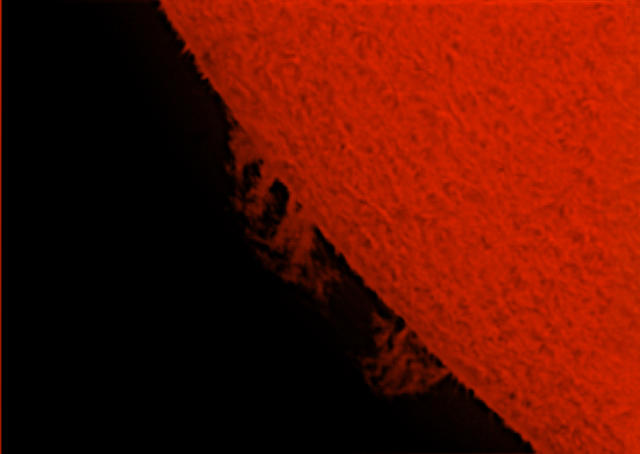 In the case of imaging prominences, it is obvious that the exposure time will have to be increased as prominences are significantly fainter than other disc features.
For this image, the prominences were captured by Chris Cole using the same equipment and settings as the sunspots above but required to create a second highly contrasted image from the same data to bring out the faint prominence details. The images of the prominence detail and the disc detail were merged together in PhotoShop using a routine similar to that of an HDR workflow.


