On the afternoon of June 5th, 2012 (the morning of June 6th on other parts of the planet) the black silhouette of Venus was observed crossing the face of the sun. This passing in front of the sun is what astronomers call a transit. The next time Venus will transit the Sun, from the Earth’s vantage point, will be December of 2117. Yes, 2117; that’s 105 years from now!
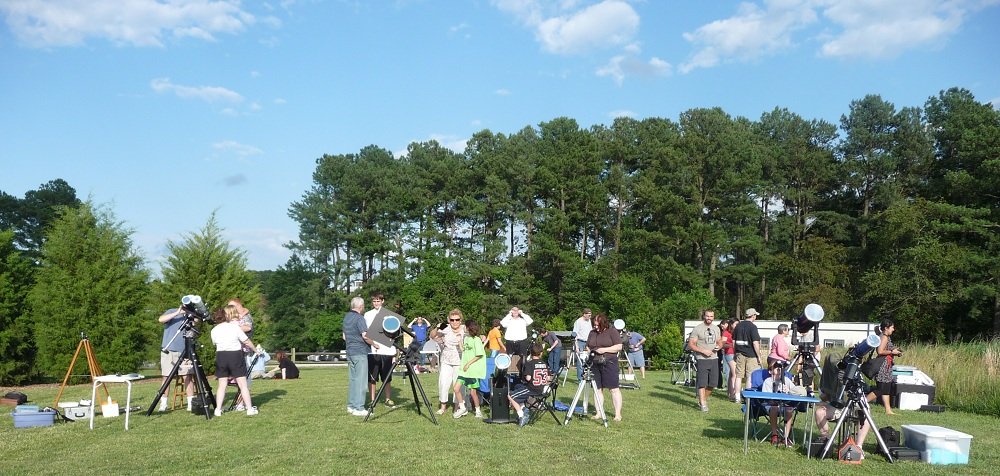
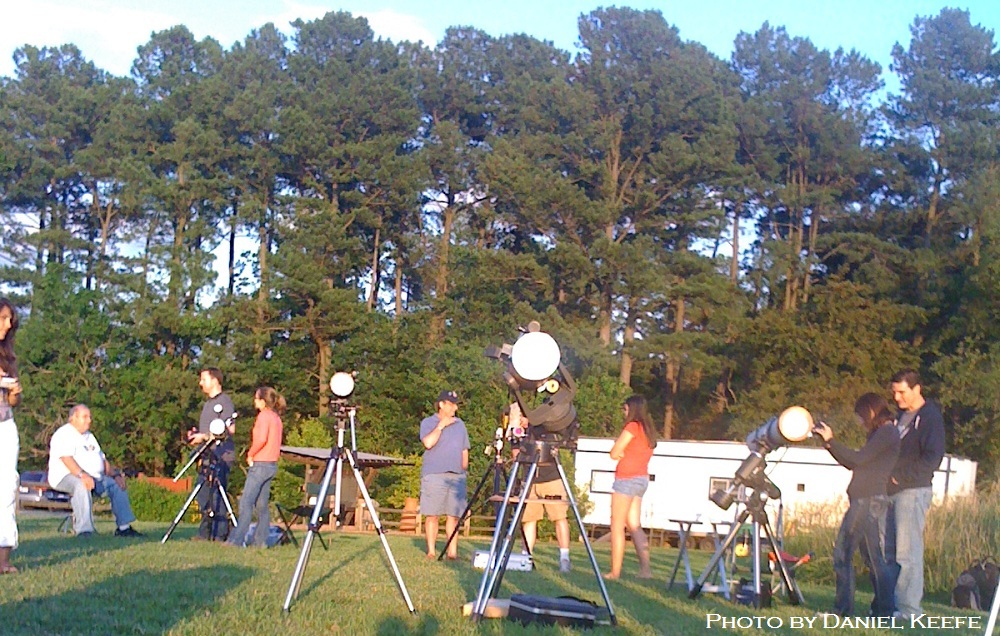
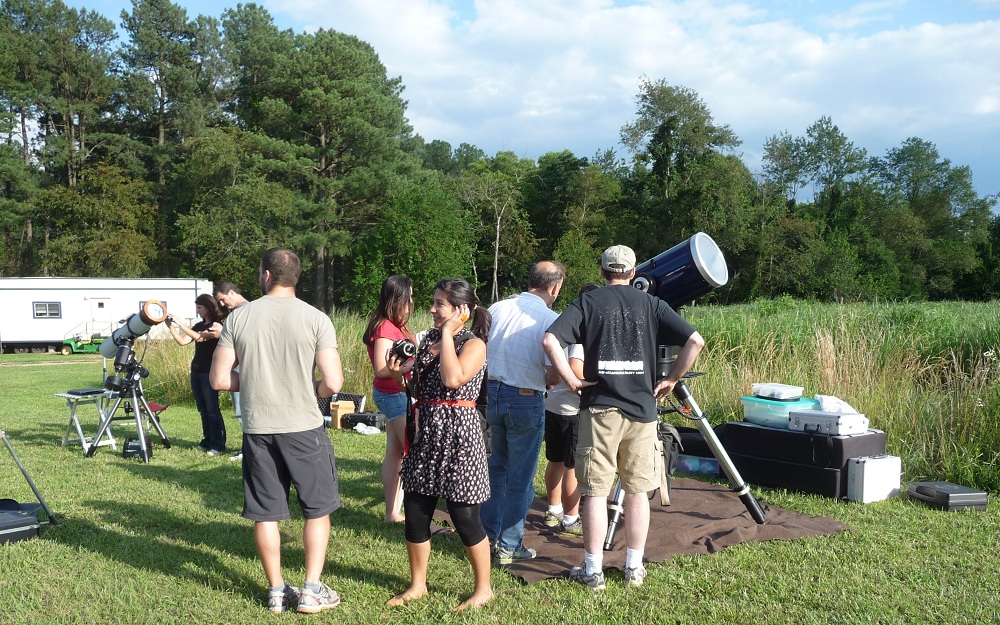
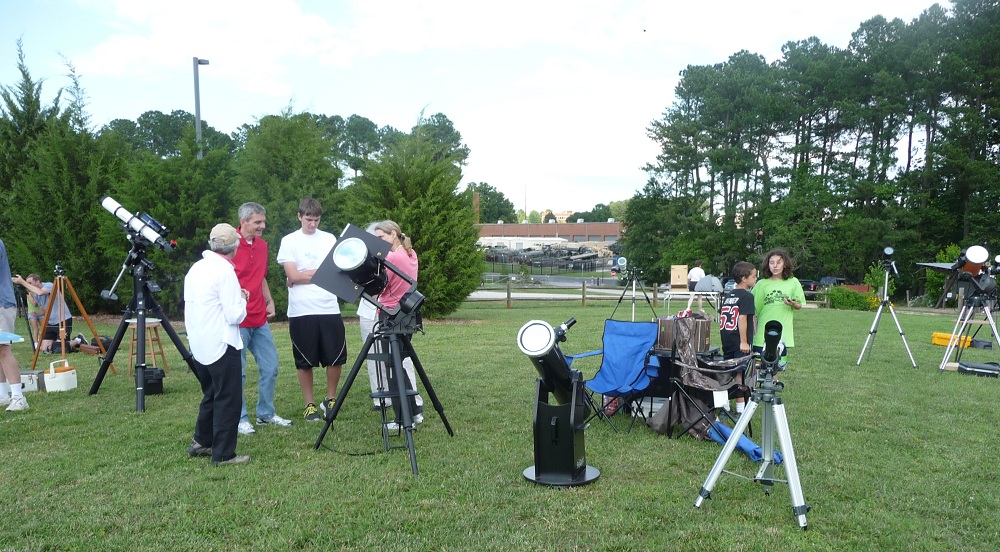
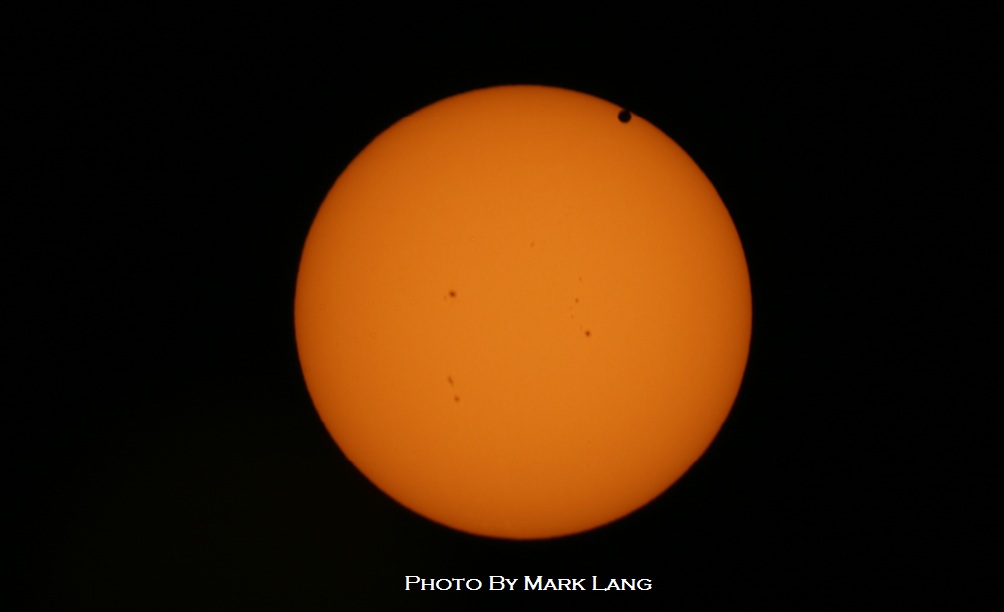 The Raleigh Astronomy Club held a viewing event hosted by the Prairie Ridge Ecostation (near the PNC Arena, formerly the RBC Center) for RAC members and their guests. Over 70 people attended the event and more than 24 members’ telescopes were on hand to provide excellent views of the transit.
Most of Tuesday afternoon was rather cloudy and the possibility of the viewing the transit from the Raleigh area was in doubt. Thankfully by around 5:30pm the Western horizon began to clear up. Around 6:04pm a voice was heard calling out, “We have first contact!” That is when the leading edge of Venus began to cross the face of the sun. At that point everyone turned their gaze to the nearest telescope or viewing device.
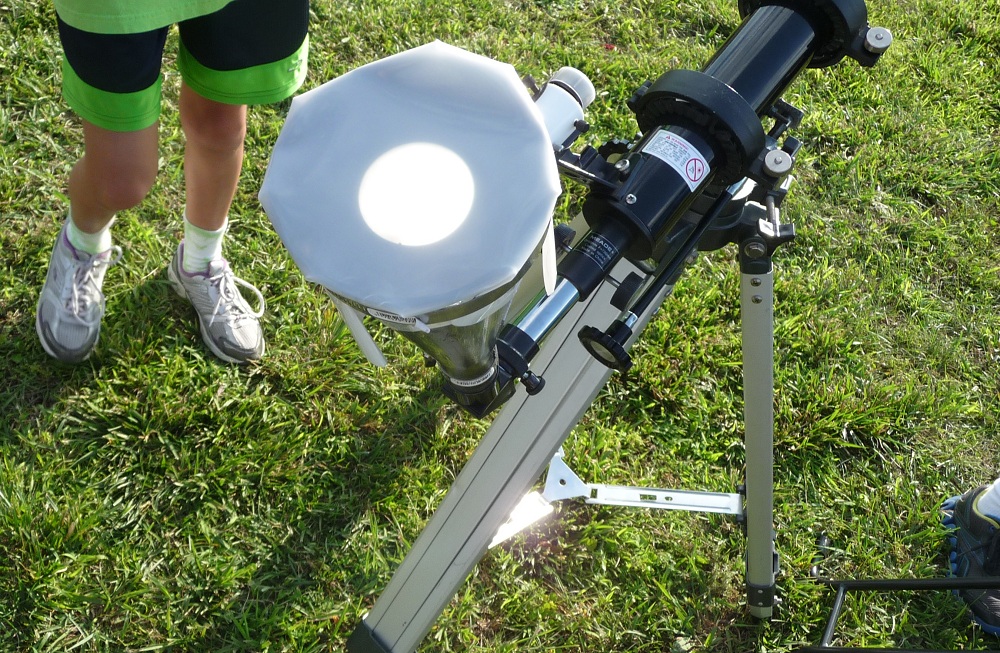
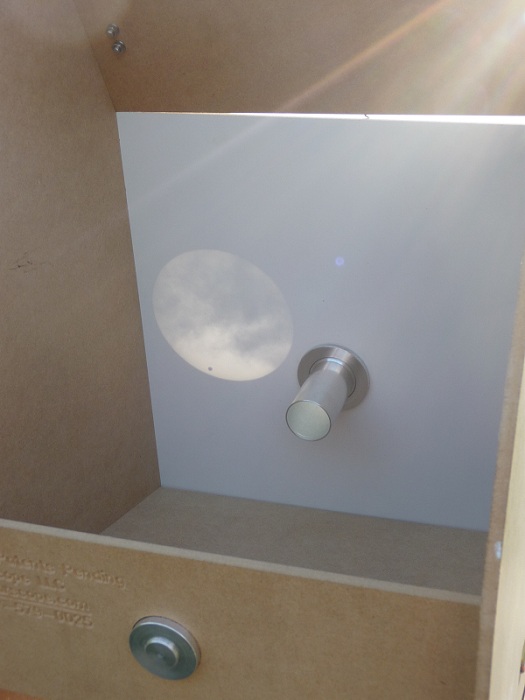
There were various methods used for safe viewing from Eclipse Glasses, welder’s glass (#14), commercially made white light solar filters, home-made white light solar filters, H-Alpha Solar telescopes, and a few different types of projection methods including a Sun Funnel design and Solar Projector.
  |
Not only where there lots of people observing, we also had quite a few imagers with dedicated telescopes and cameras taking pictures of this rare event. Additionally smart phones were a popular accessory for observers at the eyepiece snapping mementos of the transit. Below are a few images from our own RAC imagers.
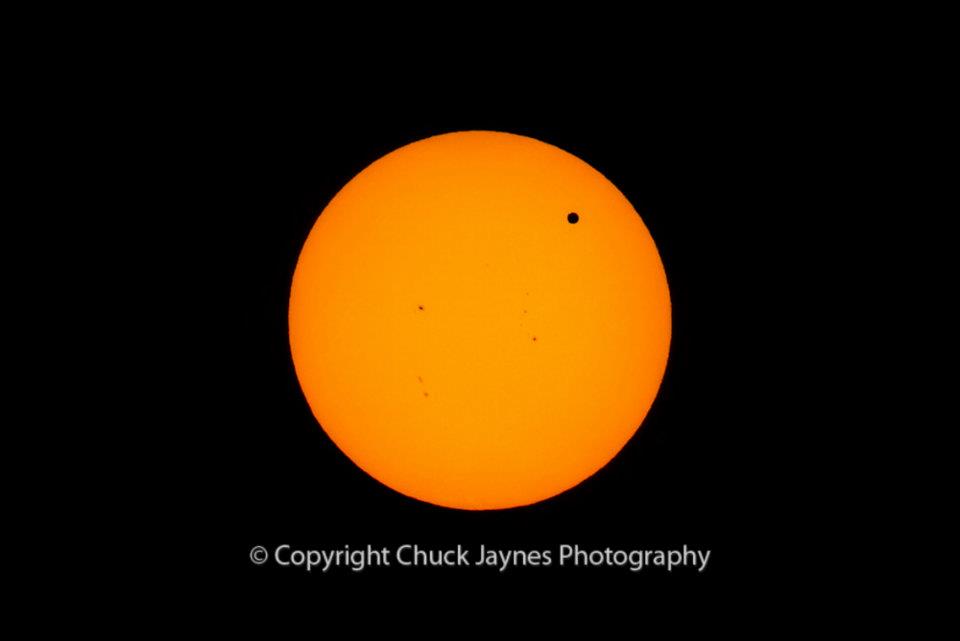
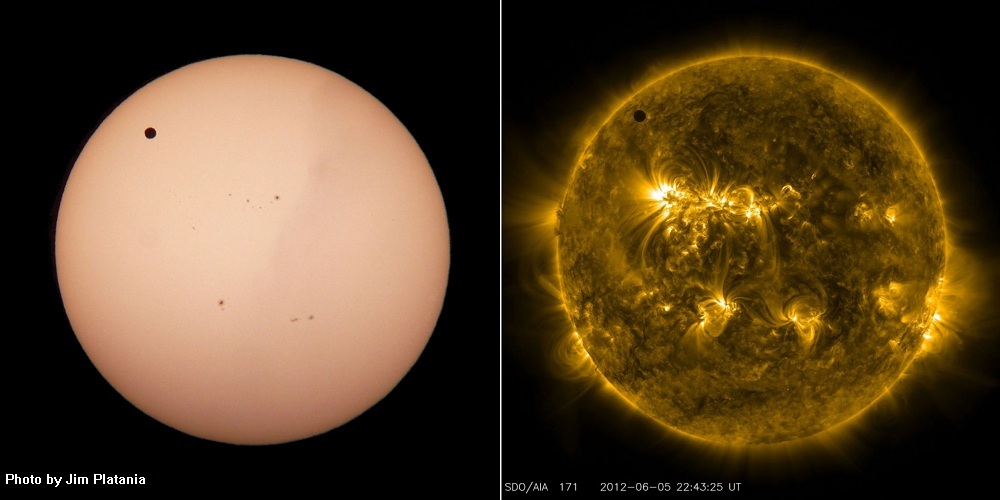
The view from Raleigh through my Baader film vs Nasa’s view. Amazing!
While clouds did occasionally block the view of the transiting Venus, most of the viewing event was not interrupted by clouds. Although the transit event would take more than 6 ½ hours to complete, once the sun set, you could no longer observe the transit from your local vantage point. At around 7:45pm the sun began to be obscured by clouds low on the horizon. With the sun at only 3 degrees or so above the horizon, that spelled the end of our views from Prairie Ridge.
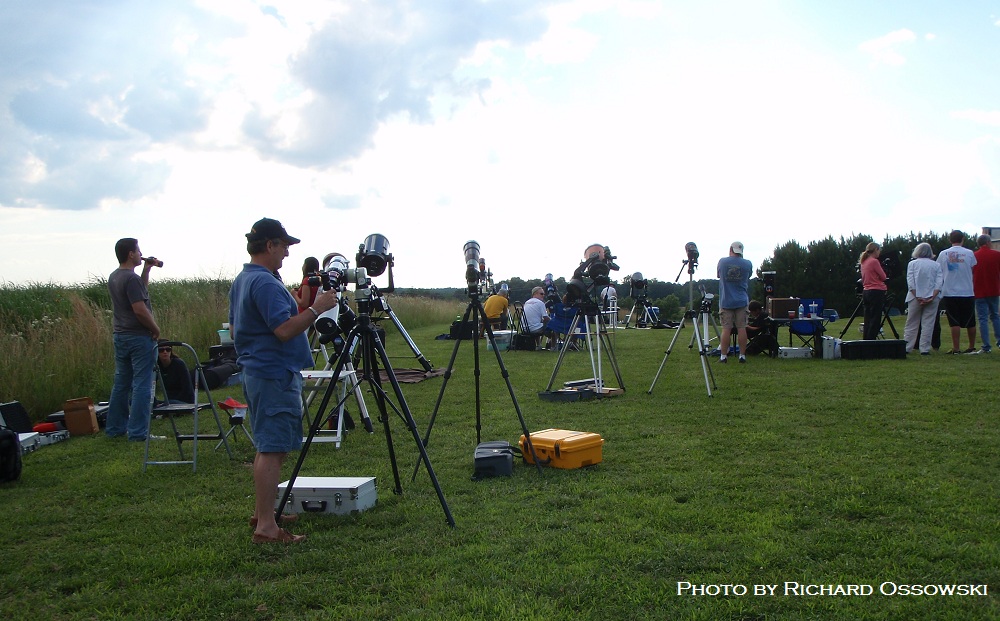
Overall it was a great event with tremendous turnout, a fantastic venue and a once in a lifetime transit. You can find out more about the Transit of Venus at http://www.transitofvenus.org/.
Below is a video and a few more photos taken of the observing event: